
A concrete block home feels permanent. The walls are solid, the structure is heavy, and there may be very little visible wood near ground level. This creates a common belief in Aruba: if termites eat wood, a concrete home must be safe.
That belief is understandable. It is incomplete.
One of the first things homeowners often tell us during an inspection is: “But my house is concrete.”
The logic makes sense. The problem is that termites are not trying to eat the concrete. They are looking for a hidden route to the materials inside the home that they can consume.
Quick answer
Termites do not eat concrete. They do not need to.
Small cracks, construction joints, pipe openings, slab edges, and hollow block cores can give termites a concealed route through a building. Once they reach wood, paper-faced drywall, cabinetry, door frames, ceiling materials, or roof timbers, the concrete around them may help keep their movement hidden.
Why So Many Aruba Homeowners Believe Concrete Stops Termites
In our fieldwork across Aruba, we regularly meet homeowners who are surprised to learn that termite activity can occur inside a concrete-block property. Their reasoning sounds logical: the main walls are concrete, so there should be nothing for termites to attack.
The weak point is not the concrete itself. It is the path around it, through its joints, or inside its empty spaces.
Many concrete masonry blocks contain hollow vertical cores. These cores reduce weight and may hold reinforcement or utilities. They can also create protected channels inside a wall.
A termite does not need to chew through the block. It only needs one opening that connects the soil or foundation area with a food source higher in the home.
How small can that opening be?
Subterranean termites can pass through a gap of about 1/32 inch, or 0.8 millimeters. That is roughly the thickness of a credit card.
A gap this small may be hidden under a floor finish, behind a cabinet, beside a pipe, where two materials meet, or inside a wall. To a termite colony searching for cellulose, it can function like an entrance.
Think about the pipe beneath a kitchen sink, the conduit entering a laundry area, the joint beside a garage wall, or the space behind a built-in cabinet. These are ordinary parts of a home, but each can create a hidden transition point between the ground, the structure, and materials termites can reach.
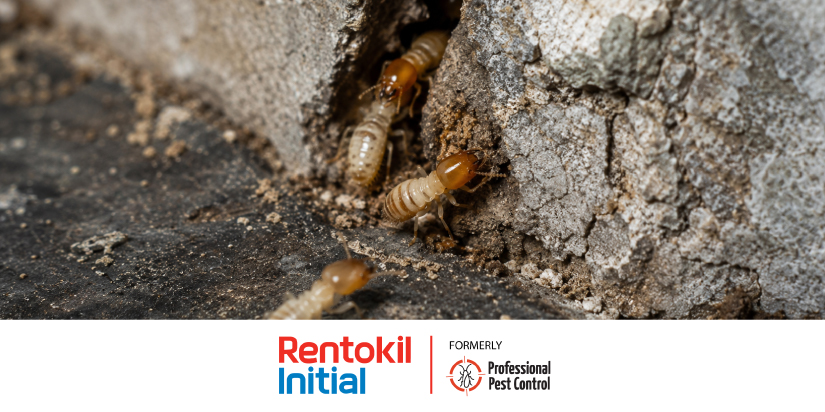
Once inside, termites tend to remain concealed. They can move through cracks and wall voids, then reach wooden roof trusses, door frames, baseboards, cabinets, built-in furniture, or the paper layer on drywall.
Visible damage may appear much later than the original entry.
Where do these hidden gaps come from?
No building remains perfectly static. Concrete cures and shrinks. Materials expand and contract under Aruba’s heat. Foundations settle. Plumbing and electrical work create penetrations. Renovations may disturb old seals or treated areas. Construction joints already exist where separate sections meet.
Regional seismic activity and related ground movement may increase stress on a structure or exacerbate existing weaknesses. It should not be treated as the automatic explanation for every crack. A crack alone does not confirm termite activity, and its cause may require assessment by a qualified building professional.
The pest-control point is simple: any opening that links soil, wall voids, or structural materials deserves attention.
Why Many Homeowners Discover the Damage Too Late
Concrete walls can make a home feel protected, yet their internal voids may conceal termite travel.
A homeowner may see clean painted walls with no obvious surface damage while activity continues behind finishes or higher in the structure.
This is why replacing one damaged piece of wood may not solve the full problem. The visible damage can be the final stop on a hidden route that began near the slab, a utility opening, or a hollow block core.
By the time the damage is easy to see, the termites may have been moving through the property for much longer.
The Signs We Tell Aruba Homeowners Never to Ignore
Possible warning signs include:
- Mud-like shelter tubes
- Discarded wings near windows or doors
- Small changes in paint or wall finishes
- Hollow-sounding wood
- Damaged door frames
- Weakened baseboards
- Unexplained damage in roof or ceiling areas
- Wood that feels unusually soft or fragile
These signs do not appear in every home. Their absence does not prove that the property is free of termites.
A professional inspection is often needed to understand whether visible damage is isolated or connected to a larger hidden route.
A concrete home is strong, but it is not termite-proof
The safer approach is to stop thinking only about what termites can eat and start looking at how they can travel.
Concrete reduces exposed wood on a building’s exterior. It cannot remove every joint, crack, opening, wall void, or wooden component. Termite risk depends on the complete structure, its history, its moisture conditions, and the routes pests may use.
Concrete can make a home stronger.
It does not automatically make it safe from termites.
The difference lies in understanding where termites travel—not only what they eat.
That is why inspection matters.
If you notice a suspicious sign or want a clearer understanding of your property’s risk, contact Rentokil, formerly Professional Pest Control Aruba at +297 582 5002. Our team can assess what is visible, identify areas that may need closer inspection, and explain the next practical step for your home.