

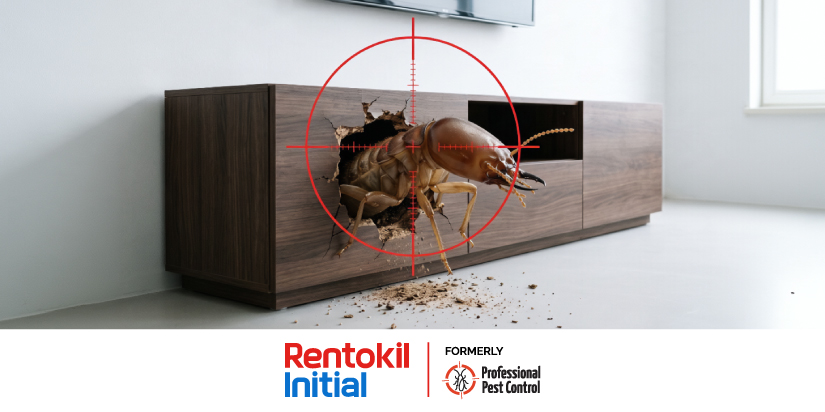
A beautiful wooden cabinet can change a room instantly.
Maybe it came from overseas. Maybe it was bought secondhand, inherited, found at an antique shop, or made from reclaimed wood.
It looks solid. Clean. Perfectly normal.
Then one morning, there is a small pile of tiny pellets underneath it.
You clean the floor.
A few days later, they are back.
At Rentokil, formerly Professional Pest Control Aruba, that recurring clue deserves attention. The cabinet may be new to the property. The termite activity inside it may be much older.
Is it Possible…?
Yes. Drywood termites can be transported inside infested wooden furniture.
Unlike subterranean termites, drywood termites do not depend on contact with soil. A colony can live inside the wood it is feeding on, hidden from view. If that piece is moved from one building, island, warehouse, or home to another, the termites inside may move with it.
The outside may still look perfectly fine.
Later, small dry pellets may begin appearing underneath the piece. These pellets can be frass, pushed out through tiny openings in the wood.
That is one reason drywood termite activity can remain unnoticed for so long. A cabinet does not need to look damaged to contain termites.
It Looked Fine When it Arrived…
One of the first questions worth asking is surprisingly simple:
“When did this piece of furniture arrive?”
A cabinet delivered three months ago tells a different story from one that has been in the same room for fifteen years.
Did it come from another property?
Was it stored somewhere for a long time?
Were termites previously found where it came from?
The timeline helps our technicians understand whether the furniture itself may be connected to the activity.
How Can One Piece of Furniture Bring Termites Into a Property?
Drywood termites are especially suited to this type of movement. They can live inside dry wood above ground and survive with very little external moisture.
The wood is their food, shelter, and living space.
That creates a very different situation from a pest that has to crawl into a suitcase, box, or vehicle during transport. In this case, the infested object itself may contain the colony.
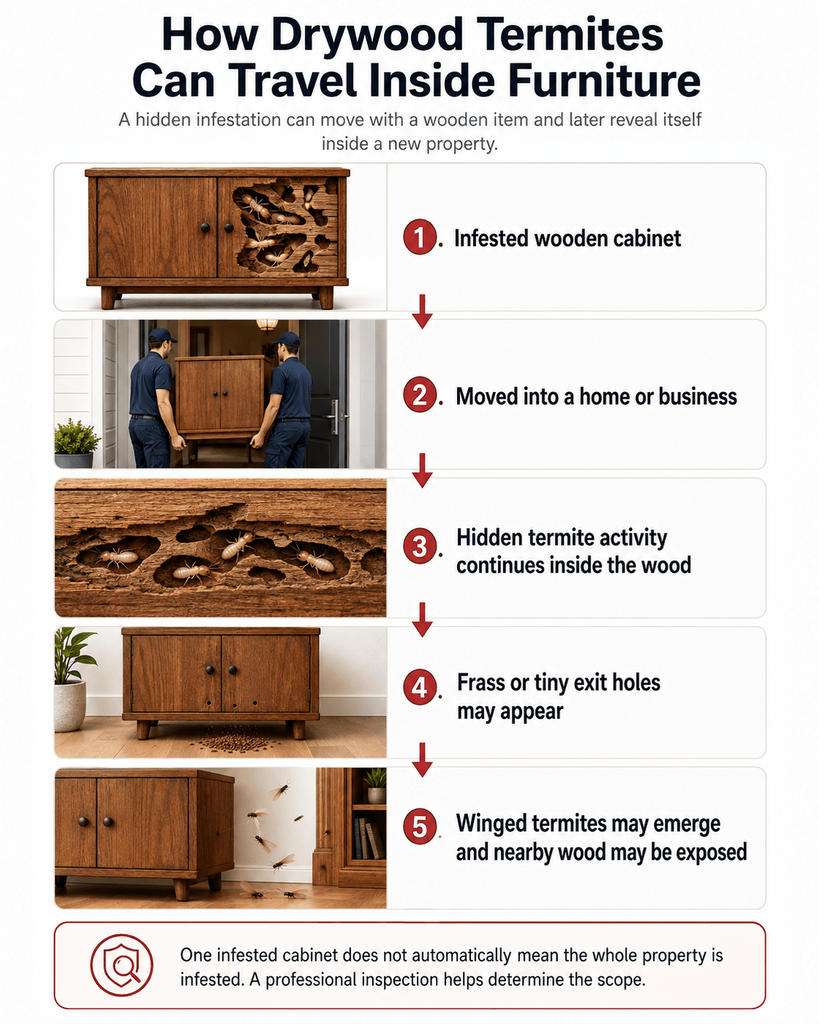
The final step is not automatic.
Finding termites in one cabinet does not prove that the rest of the property is infested.
It does create a reason to inspect beyond the cabinet.
What Do Our Rentokil Technicians Look For?
When our team examines suspicious wooden furniture, the question is not simply:
“Are there termites in this cabinet?”
A better question is:
“Is the activity limited to this object, or is there evidence somewhere else?”
Our technicians may look for dry pellet-like frass, very small openings in the wood, discarded wings, weakened sections, hollow areas, or related signs around nearby wooden elements.
The surrounding area matters too.
Built-in cabinets, door frames, baseboards, ceiling wood, shelving, decorative woodwork, and other nearby materials may need attention depending on what the inspection reveals.
One clue does not tell the entire story.
Its location, condition, recurrence, and relationship to nearby wood can help the technician build a clearer picture.
So…The Risk is Not “Old Furniture”
Imported furniture is not automatically infested. Neither is antique, secondhand, or reclaimed wood.
The better question is:
What is the history of that piece?
A beautiful finish tells you how the furniture looks today.
It cannot tell you everywhere that wood has been.
That hidden history is what makes certain furniture worth checking when suspicious signs appear.
Before You Throw It Away
If you find pellets, tiny openings, discarded wings, or unexplained wood damage, do not rush to discard the furniture.
Take photos.
Note exactly where the signs appeared.
Avoid drilling into suspicious areas or spraying random products into the openings.
Removing the piece too soon can erase useful evidence.
A professional inspection can help determine what the signs mean and whether anything nearby needs attention.
The Furniture May Be New to You. The Termites May Not Be.
Termite activity often announces itself with something small. A few pellets. A tiny opening. A set of discarded wings. A piece of wood that suddenly feels different. If that clue keeps coming back, do not dismiss it as ordinary dust, look closer.
If you have noticed suspicious signs around wooden furniture in your home, villa, rental property, office, restaurant, or store, contact:
Rentokil, formerly Professional Pest Control Aruba
+297 582 5002
Schedule a termite inspection and find out if the furniture is the only place telling the story.