
Have you ever replaced a phone charger because your phone was not charging, only to realize later that the problem was the outlet? That is similar to what happens when damaged wood is replaced before treating termites.
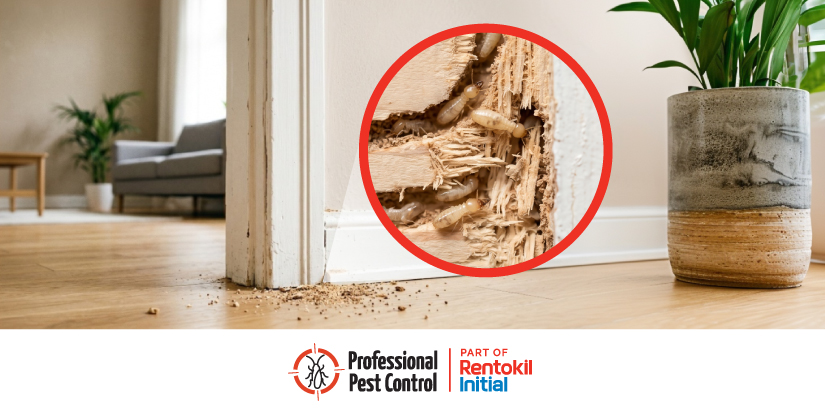
The frame, cabinet, ceiling panel, or baseboard may be the visible damage. The real activity may be much deeper inside the property, hidden within walls, ceilings, or around the foundation.
We want to explain this mistake through one of our recent cases in Aruba.
A few weeks ago, a homeowner called us after replacing a damaged door frame. At first, the problem looked solved. The old frame had been removed, new wood was installed, and the area was painted. From the outside, everything looked great.
Then, after some time, the same signs started to appear near the same area. A small pile of dust showed up again. The new wood did not feel as solid as it should. There were signs that something was still active behind the surface.
Our team inspected the property, and the issue became clear: the damaged frame had been replaced, but the termite activity had never been treated. The repair removed the visible damage. It did not address what was happening deeper inside the structure.
Our team at Rentokil and Professional Pest Control see this mistake often.
A homeowner notices damaged wood, calls someone to replace it, paints the area, and thinks the problem is gone. The house looks better for a moment, but termites are still there. There is a better way to handle the problem: professional termite treatment before repair work begins.
The Damage You See Is Usually Not Where the Problem Started
One of the biggest misunderstandings about termites is that people treat the visible damage as the full problem.
It usually is not.
When termites reach a home, they can be active inside walls, ceilings, frames, built-in woodwork, and areas close to the foundation. They can move through hidden spaces long before the homeowner sees clear signs.
By the time the damage is visible, the activity may already be deep inside the structure. That is why replacing damaged wood does not stop termites. It only removes the part that already failed.
The activity can still be alive behind the surface.
Termite Treatment Is Not Regular Pest Control
Some people think termite treatment is the same as treating cockroaches, ants, or rodents. It is not.
With many regular pests, treatment may focus on visible activity, entry points, sanitation, traps, or surface areas. Termites require a different level of work.
When a house already exists, the treatment has to reach areas the eye cannot see. Our team drills strategic points around the property to get as close as possible to the foundation areas. Then, using special equipment, the treatment product is introduced into those points.
The goal is to reach the zones termites use to move, nest, and continue feeding. This is why a simple spray on damaged wood is not enough. The problem is usually deeper than the piece of wood you are looking at.
The Better Order: Inspect, Treat, Then Replace
After years of experience in the field, we can say this clearly: the order matters.
Before replacing wood, the property should be inspected by professionals. A termite inspection helps determine if there is active termite activity, where the risk areas are, and what type of treatment is needed. Then, the termite treatment should be done.
After that, the damaged wood can be replaced with more confidence. This protects the repair investment and reduces the chance of installing new wood into an untreated area.
Repairing the Wood Is the Last Step, Not the First
Replacing damaged wood can make a property look clean again, but termite control is about knowing where to look before the next repair begins.
At Rentokil and Professional Pest Control Aruba, our experience has shown us that visible damage is often only one part of the story. What matters most is finding out if there is still activity behind the surface, near the foundation, or inside areas the homeowner cannot easily inspect.
That is where our team comes in. We know what signs to look for, where termites are likely to hide, and how to treat the areas that matter before new wood, paint, or finishing work is added.
If you are not sure whether the damage in your home, villa, office, restaurant, or rental property is old or still active, you do not have to guess. Contact the experts: +297 582 5002.
Rentokil + Professional Pest Control Aruba are here to help you inspect, understand, and treat the problem the right way.
Before you replace the wood, let our team check what is happening behind it.